What changes when you buy a listed building or conservation area home
The transactional risk sits in what a previous owner already did without consent, and listed building enforcement carries no time limit at all.
7 mins read
23-09-2026
Written by

Editorial Team
Similar Guides

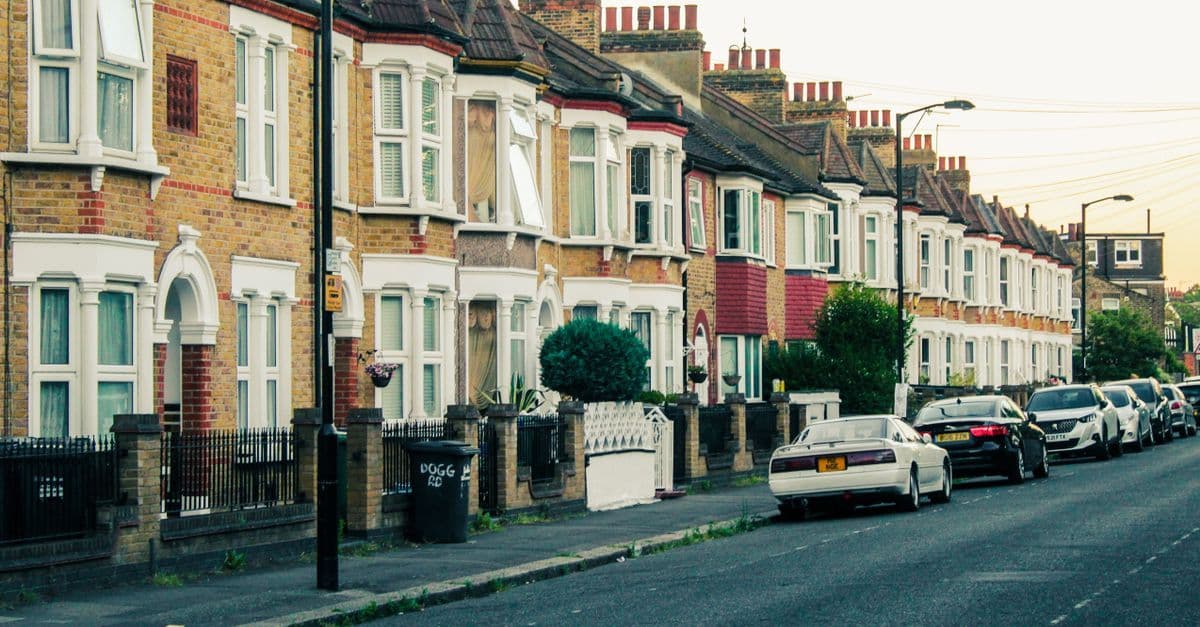
The National Heritage List for England currently records almost 380,000 listed buildings, and the number that trips buyers up is the one nobody checks before they view the house: there is no time limit on enforcement action for unauthorised work to a listed building. A previous owner's uncertificated kitchen extension or replaced sash windows can still land on your desk years after you complete.
What listing actually protects
Listing covers the whole building, not just the parts a buyer might assume matter. That includes the interior, fixtures, and any object or structure fixed to it, plus later additions regardless of when they were built. It also extends to any object or structure within the curtilage that has stood there since before 1 July 1948, which is why an old outbuilding or boundary wall can be listed in its own right even though nobody thought to mention it in the particulars.
Listed building consent and planning permission are separate approvals
Listed building consent is a different process from planning permission, and buyers regularly assume the two travel together. They don't. You can hold planning permission for an extension and still need separate listed building consent for the same work, and consent is required for demolition, alteration or extension in any way that affects the building's character as a building of special interest. That includes internal work: moving a stud wall or stripping out a fireplace can need consent even though nothing changes from the street. There's no fee for a listed building consent application, which is one of the few parts of this process that costs nothing.
The three grades, and why the split matters
Grade I buildings, of exceptional interest, make up about 2.5% of the list. Grade II* buildings, particularly important with more than special interest, make up about 5.8%. The remaining 91.7% are Grade II, of special interest warranting every effort to preserve them. All three grades carry the same legal protection under the Planning (Listed Buildings and Conservation Areas) Act 1990. A Grade II terrace and a Grade I country house need the same consent for the same category of work, so don't assume a lower grade means a lighter process.
Grade | Description | Share of list |
|---|---|---|
Grade I | Buildings of exceptional interest | ~2.5% |
Grade II* | Particularly important buildings of more than special interest | ~5.8% |
Grade II | Buildings of special interest, warranting every effort to preserve them | ~91.7% |
Unauthorised past work doesn't become immune with time
This is the part that catches buyers out. Ordinary planning breaches in England now become immune from enforcement after 10 years for most cases, extended from four years for breaches that occurred on or after 25 April 2024, with transitional rules protecting breaches that started before that date. Listed building enforcement has no equivalent immunity period at all. Work carried out on a listed building without consent 20 or 30 years ago is still a live enforcement risk today, whoever owns the building now.
Section 9 of the Planning (Listed Buildings and Conservation Areas) Act 1990 sets out the penalties: up to six months' imprisonment or a fine on summary conviction, or up to two years' imprisonment or a fine on conviction on indictment. Courts must also have regard to any financial benefit that accrued, or appears likely to accrue, to the offender because of the works, which matters if a seller carried out unauthorised alterations that added value before marketing the property. Local authorities have also been able to issue temporary stop notices for listed building offences since 2024, giving them a faster tool to halt unauthorised work in progress.
None of this is retrospectively cured by a sale. If the seller carried out work without consent, that liability doesn't reset when the keys change hands. Ask for evidence of listed building consent for every material alteration the seller or a previous owner made, not just the ones that look structural, and get a conveyancer who routinely handles listed buildings to check the file before you exchange. Where consent is missing, retrospective listed building consent or an indemnity insurance policy are the usual routes, and it's worth understanding how indemnity insurance works for property legal defects before assuming a policy will simply paper over the gap, because it covers the financial risk rather than fixing the underlying breach.
Conservation areas add a second layer
A conservation area is an area of special architectural or historic interest whose character the local authority has decided to preserve or enhance. Being in one doesn't mean every building inside it is individually listed, but it does mean extra controls apply across the board.
Conservation area consent for demolition was abolished in 2013. Demolishing an unlisted building in a conservation area now falls under a "relevant demolition" category that requires ordinary planning permission instead of a separate consent regime, which simplified the process on paper but didn't remove the requirement itself.
Article 4 directions go further still. A direction removes specified permitted development rights in a defined area, meaning changes a homeowner could normally make without any application at all, replacing windows, rendering a wall, removing a boundary feature, suddenly need planning permission. Article 4 directions vary street by street and are set locally, so the fact that a neighbouring conservation area has no restriction on window replacement tells you nothing about the street you're buying on. Check with the local planning authority directly, because this is exactly the kind of restriction that doesn't show up on a standard search unless you ask the right question.
Trees carry their own protection and their own catch
In a conservation area, cutting down, topping, lopping or wilfully damaging a tree with a trunk over 75mm in diameter generally requires six weeks' written notice to the local planning authority under section 211 of the Town and Country Planning Act 1990, even where the tree has no individual Tree Preservation Order. The point of the notice period is to give the council time to consider making a TPO before the work happens.
The detail that surprises new owners: where a tree protected by a TPO is removed and a replacement duty applies, that duty attaches to the land and passes to whoever owns it next, not just the person who cut the tree down. Buy a garden with a recently felled protected tree and you can inherit the legal obligation to replace it, regardless of who did the felling or why.
Getting repairs right matters for the same reason
Historic England's guidance on maintaining older buildings consistently pushes toward materials that let the structure breathe rather than seal it, and the same logic that applies to any period property applies more strictly here because unsympathetic repairs to a listed building can themselves need consent. If you're weighing up a listed period property, it's worth reading up on how lime mortar and breathable materials work in older brickwork before you commission any repair work, because using the wrong modern materials on an old building creates problems that are expensive to reverse and can itself be an unauthorised alteration if it changes the building's character.
Scotland, Wales and Northern Ireland run their own systems
Listing isn't a single UK-wide regime. In Scotland, Historic Environment Scotland lists buildings under categories A, B and C, roughly equivalent in principle to the Grade I, II* and II structure in England but administered separately. In Wales, Cadw maintains its own list and grading. In Northern Ireland, the Department for Communities lists buildings under grades A, B+, B, B1 and B2, a finer split than either England or Scotland uses. If you're buying outside England, don't assume anything from this guide about consent processes, fees or enforcement timescales carries over directly. Check the equivalent body for wherever the property actually is.
What to do before you offer
Ask the estate agent or seller whether the property, or anything within its curtilage, is listed and to what grade, and whether it sits inside a conservation area with an Article 4 direction. Ask specifically whether any alterations made during the seller's ownership, or that they're aware of from before, had listed building consent. If the answer is vague, that's the moment to get a conveyancer who has handled listed buildings before, not after you've committed to a completion date.