
Documents to gather before selling your house | Moving Compared
Title register, EPC, FENSA and building regs certificates, TA6 and TA10 forms, and the leasehold pack — what each one costs and where to get it before you list.
3 mins read
28-08-2026
Written by

Editorial Team
Similar Guides


You can put a house on the market with almost no paperwork, but you cannot exchange contracts without it, and missing documents are among the commonest causes of conveyancing delay. Everything below can be gathered before you list, which is exactly when to do it.
Document | Why you need it | Typical cost | Get it from |
|---|---|---|---|
Title register and plan | Confirms ownership | £7 | HM Land Registry |
EPC | Legally required before marketing | £65-£120 | Accredited EPC assessor |
FENSA / building regs | Evidence past work was lawful | Free if you have them | Installer records, local authority |
TA6 & TA10 forms | Standard Law Society disclosure forms | Free | Your conveyancing solicitor |
Leasehold management pack | Required for flat sales | £150-£500 | Your freeholder or managing agent |
TR1 transfer deed & redemption figure | Produced during conveyancing | - | Your solicitor and lender |
Proof of ownership
For a registered property you do not need the old paper deeds. Your solicitor works from official copies of the title register and plan, and you can download your own title register from HM Land Registry, which covers England and Wales, for £7 before you list. That £7 check earns its keep — paid-off mortgages that were never removed from the register, restrictions and rights of way all show up there, and finding them yourself now beats your buyer's solicitor finding them mid-transaction. If the house is unregistered, the paper deeds do matter, so track them down early. They are often held by the solicitor who acted when you bought, or by your old lender.
The energy performance certificate
In England and Wales you must order an EPC before you market the property, and the government guidance on EPCs when selling says plainly that you can be fined if you do not have one when you need it. A certificate lasts 10 years, so check the national EPC register first; if you bought within the last decade there is a fair chance a valid one already exists. A new one costs about £65 to £120, and our separate article on EPC ratings covers whether improving the score is worth it before selling.
Certificates for work done to the house
Buyers' solicitors ask for evidence that past alterations were lawful. That means FENSA or equivalent certificates for replacement windows and doors, building regulations completion certificates for extensions and loft conversions, electrical installation certificates for major wiring work, and a Gas Safe record or recent boiler service. None of these is a legal condition of selling, but every gap generates enquiries, and enquiries generate weeks. Where a certificate is genuinely lost, an indemnity insurance policy usually plugs the hole for a one-off premium. We explain the window paperwork in our separate article on why a FENSA certificate matters when selling.
The TA6 and TA10 forms
Your solicitor will ask you to complete two standard Law Society forms. The TA6 property information form covers boundaries, disputes, notices, alterations and environmental matters; the TA10 fittings and contents form records what stays and what goes, down to the curtain poles. Answer accurately rather than optimistically. A buyer can bring a misrepresentation claim after completion if a no should have been a yes, and "not known" is an acceptable answer where it is true.
Order the leasehold management pack on day one
Selling a flat adds the leasehold management pack, produced by your freeholder or managing agent, covering service charges, ground rent, major works and disputes. Typical cost runs £150 to £500, though larger managing agents — especially in London and the South East — sometimes charge £600 to £800, and it can take two to four weeks to arrive. Order it the day you instruct an agent. It is the most common cause of leasehold delay, and it is the one document on this list you cannot produce yourself.
Two documents you do not need yet
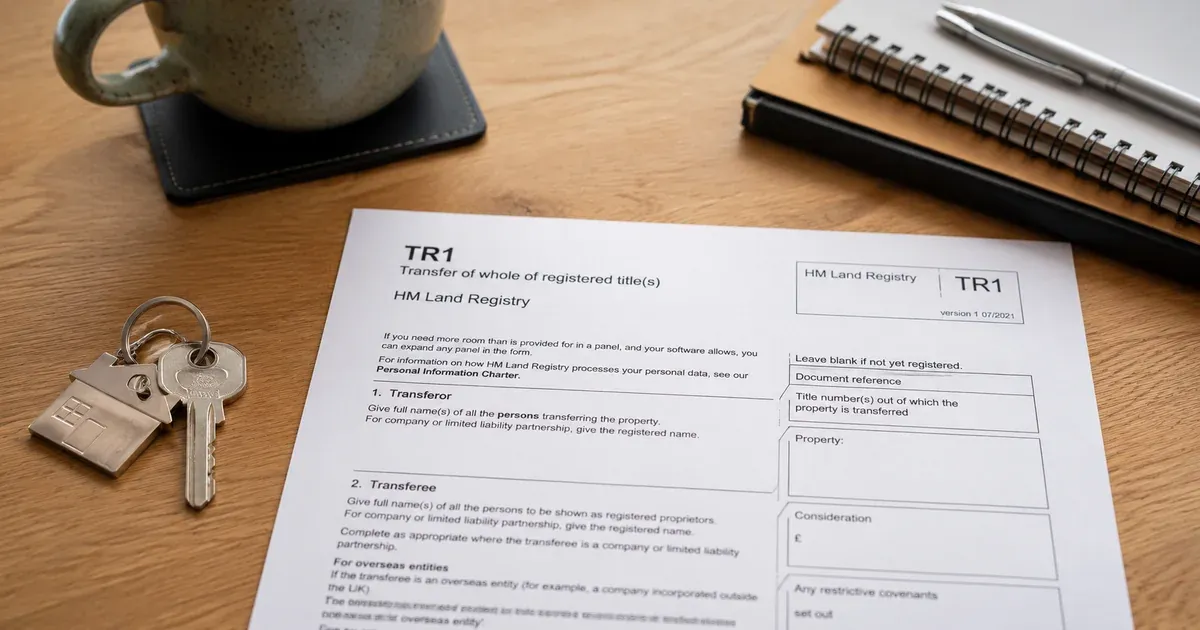
Sellers sometimes hunt for things the solicitors produce later. The TR1 transfer deed is drafted during conveyancing, not before, and our separate article on the TR1 form explains it. Your mortgage redemption figure is also obtained by your solicitor near completion, although having the account number ready helps. Add photo ID and proof of address for anti money laundering checks, and the file is complete.
A seller who lists with the title checked, the EPC ordered, the certificates in one folder and the management pack requested has removed most of the avoidable delay before it can start. If you are choosing who does the legal work, you can compare like-for-like conveyancing quotes before you go to market.