
How to declutter before moving house, room by room
Every box of things you don't want is a box you're paying someone to carry. Here's how to clear out room by room, and why doing it before your removals survey can bring the quote down.
6 mins read
30-09-2026
Written by

Editorial Team
Similar Guides

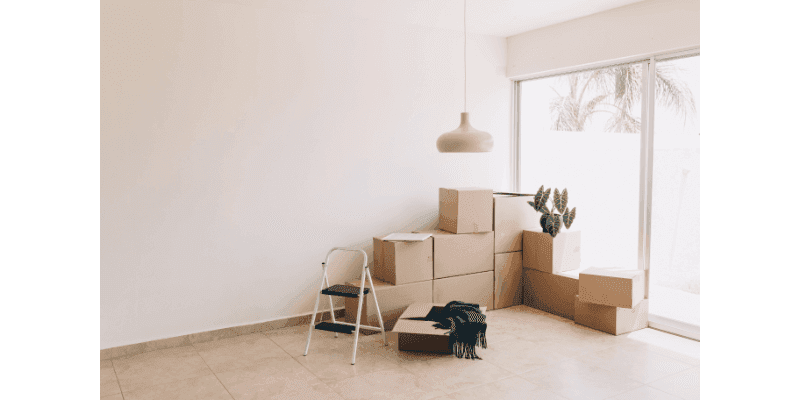

Why decluttering before a move saves you money
Removal firms might talk about a "three-bed move", but what they're really pricing is how much stuff there is. When an estimator walks round your home, they're working out the volume of everything that needs to go, then how big a van, how many crew and how many hours that will take. Every box of things you don't want is a box you're paying someone to wrap, carry, drive and unload.
So decluttering before a move isn't just about starting fresh. It's one of the few moving costs you can actually control. Our guide to removal costs shows how much the size of the move matters.
Home size | Local move (within 50 miles) | Long-distance move (50+ miles) |
|---|---|---|
1-bedroom flat | £300 to £600 | £500 to £1,000+ |
2-bedroom house | £500 to £900 | £800 to £1,500+ |
3-bedroom house | £700 to £1,200 | £1,200 to £2,500+ |
4+ bedroom house | £1,000 to £2,000 | £1,800 to £4,000+ |
Clearing out enough to drop down a size won't always halve the bill, but a smaller load can mean a smaller van, one fewer crew member or a shorter day, and all of those show up on the quote. It's the same with packing. If you're paying for a packing service, less to pack means fewer hours and fewer boxes.
The one rule that makes this work is timing. Declutter before the removals survey, not after it. If you get quotes with a loft full of junk and then clear it, you've been quoted for a move you're no longer making. Our guide to the removals survey explains what the estimator looks at.
When to start
Decluttering for a move always takes longer than people expect, so if you can, start around eight weeks before moving day. That gives you time to sell things properly rather than panic-giving them away in the last week, and it means the house is lighter when the removal firms come round to quote.
Work through one room or area at a time. Trying to do the whole house in a weekend is how people end up with a hallway full of bags that never leave.
A simple way to decide what stays
For every item, pick one of four piles. Keep, sell, donate or bin. Don't make a "maybe" pile, because it always turns into a keep pile.
A few questions help. Have you used it in the last year? Would you buy it again today? Is there a place for it in the new home? If you're not sure about that last one, look at the floor plan. The sofa that just about fits your current lounge might not fit the new one at all.
Declutter before moving checklist, room by room
Loft, garage and shed
Start here. These spaces are full of things nobody has looked at in years, which makes them the easiest wins and the biggest volume savings. Old paint, broken garden furniture, empty boxes kept "just in case" and baby equipment you've outgrown can almost always go.
Kitchen
Most kitchens have far more than anyone uses. Clear out duplicate utensils, chipped mugs, gadgets you haven't touched since the Christmas you got them, and anything with a missing lid. Use up food in the freezer and cupboards in the weeks before the move rather than paying to move half-empty packets.
Living room
Go through books, DVDs, games and ornaments. Be honest about furniture, too. Big items like sideboards, armchairs and bookcases take up a lot of van space, so if something doesn't suit the new place, selling it now saves money twice.
Bedrooms and wardrobes
Clothes are where most people can clear the most without missing anything. Take out anything that doesn't fit, hasn't been worn in a year or is waiting for a repair that's never going to happen. Spare bedding, old pillows and duvets are worth a look too.
Bathroom
Quick and satisfying. Bin out-of-date medicines (most pharmacies will take these back), half-used toiletries you don't like and old towels.
Kids' rooms
Involve children if they're old enough, and let them choose a few things to donate. Outgrown toys, clothes and school work can be thinned out a lot without upsetting anyone.
Paperwork and home office
Shred old bills and bank statements you no longer need, but keep anything important for your move, like ID, mortgage paperwork and the details for your new home. Old cables and chargers for gadgets you no longer own can go to electrical recycling.
What to throw away when moving (and what the movers won't take)
Some things are worth getting rid of simply because most removal firms won't carry them. That usually includes paint, fuel, gas bottles, aerosols, fireworks and garden chemicals. Check with your removal company, but plan to use these up, give them away or take them to your local tip before moving day.
It's also worth thinking about anything that's cheaper to replace than to move. Old flat-pack furniture that won't survive being taken apart again is the classic example.
Selling, donating and recycling
Selling online
Selling your own unwanted things is a good way to cover some of your moving costs. HMRC's guidance for online sellers says that if you're just selling personal belongings now and then, you don't usually need to tell them. Online platforms do share details of sellers who make 30 or more sales a year, but that's an information-reporting rule, not a tax bill.
Donating
Charity shops are the obvious option for smaller items. For furniture, some charities, including the British Heart Foundation, will collect good-quality items for free.
Tip runs and bulky collections
For everything else, your local recycling centre is usually the cheapest route. Many councils also offer a bulky waste collection for large items, usually for a fee. Old electricals, from kettles to TVs, shouldn't go in the bin. Take them to the recycling centre or check whether the shop you're buying a replacement from will take the old one back.
Packing and decluttering at the same time
It's tempting to declutter as you pack, and for the last few cupboards that's fine. For most of the house, though, it works better to finish decluttering first, so you only buy boxes for things you're keeping. If you're thinking of storage for anything you're not ready to part with, our guide to storage solutions for home movers covers the options, but be honest about whether you'll ever go back for it.
When you get to packing, our moving house checklist helps you plan the rest of the move week by week. And if you're moving somewhere smaller, our guide to downsizing your home has more on fitting a lifetime of belongings into less space.
Get your quotes once the clutter's gone
Moving and decluttering in the same few weeks is hard work, but the less you move, the less you pay, so do the hard part first. Once the loft's clear and the charity bags have gone, you can compare house removals quotes and get prices based on what you're actually taking.