Selling a house with Japanese knotweed
What the TA6 asks about knotweed, your legal duties as a seller, and how a management plan and guarantee affect the sale.
5 mins read
09-11-2026
Written by

Editorial Team
Similar Guides
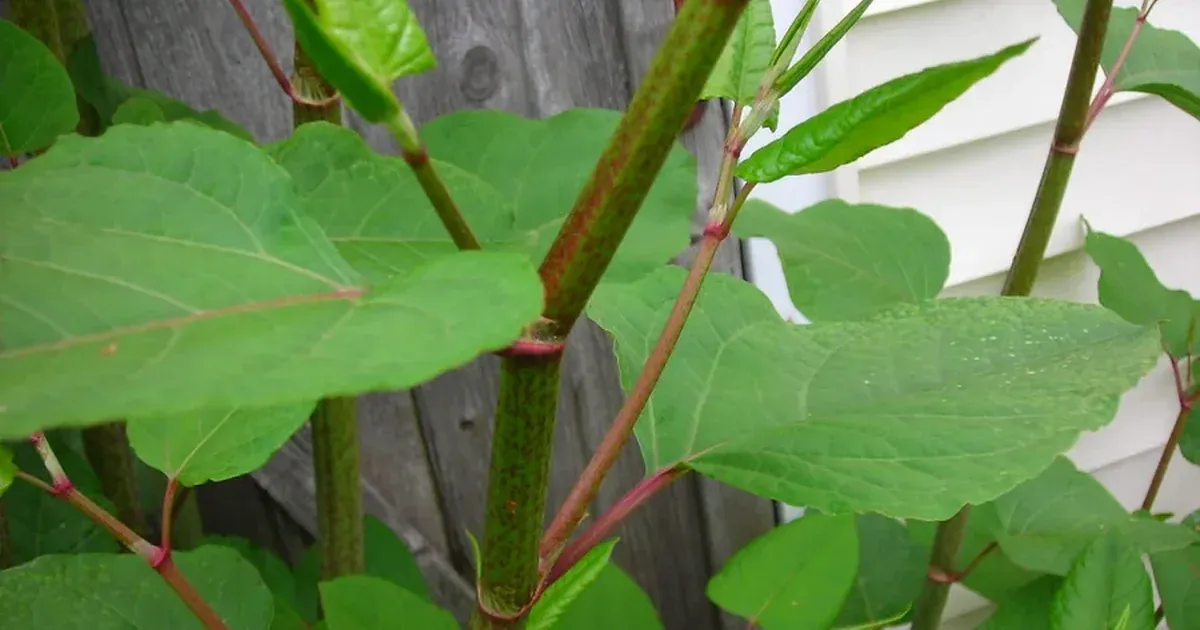

Japanese knotweed does not make a house unsellable. It changes what you have to disclose, which lenders will proceed, and how long the sale takes. Get the disclosure wrong and you can be sued years after completion, so the paperwork matters more than the plant.
This is general information rather than legal advice, and a conveyancer should see your treatment documents before you answer anything in writing.
What the TA6 form asks
The Law Society’s TA6 Property Information Form is now in its sixth edition, which replaces the fourth and fifth editions. It became mandatory for firms in the Conveyancing Quality Scheme on 30 March 2026. Japanese knotweed is covered at question 8.6. According to the Law Society’s explanatory notes, a property is usually considered at risk if the plant is growing on it or within three metres of its boundary.
The notes also point out that even if no growth is visible above ground, there could be a rhizome, or root, in the soil, which is why many sellers answer “not known”. If you have a survey report or a management plan, the notes say to attach a copy.
Answering “no” when you are not certain is the risky option. The Misrepresentation Act 1967 puts the burden on the seller to show they had reasonable grounds to believe their answer was true. That was the issue in the 2023 case of Downing v Henderson at the Central London County Court. The seller had answered no and said a large bush hid any knotweed from view. The judge accepted that he believed there was none, but was not satisfied he had shown reasonable grounds for that belief, and evidence that the knotweed had once stood about two metres tall and had been treated with herbicide counted against him. He was ordered to pay the buyer damages and legal costs.
Your legal duty is to stop it spreading
You do not have to remove knotweed from your land unless it is causing a nuisance, according to the government’s guidance, but you must stop it spreading off your property. Causing it to grow in the wild is an offence under section 14 of the Wildlife and Countryside Act 1981, and on conviction on indictment it can carry up to two years in prison.
Neighbours have their own route. In Davies v Bridgend County Borough Council, decided by the Supreme Court in May 2024, encroaching knotweed became an actionable private nuisance once the landowner was, or ought to have been, aware of the risk of damage and loss of amenity. The claimant still recovered nothing for the lower value of his home, because that loss had happened before the council’s breach began.
Treatment plans and insurance-backed guarantees
Herbicide treatment usually takes at least three years, the same government guidance says, and the plant can regrow if the soil is disturbed. If it is dug out instead, soil or plant material containing knotweed may be classed as controlled waste. It has to go to an authorised site through a registered waste carrier, or be buried on the site it came from at least five metres down, or two metres down with a geotextile membrane. The Environment Agency must be told at least a month before burial.
RICS guidance for valuers says that further investigation should be carried out by an accredited member of a recognised trade body, currently the Property Care Association or the Invasive Non-Native Specialists Association, and that a management plan should be prepared depending on the findings. It also expects a contractor’s guarantee of at least five years, backed by insurance that keeps the guarantee valid if the contractor becomes insolvent. RICS calls that combination an insurance-backed guarantee, and says the plan should be transferable to later owners.
We cover how surveyors and lenders treat knotweed in our guide to Japanese knotweed, house surveys and mortgages. Starting treatment before you list, rather than after an offer, means a dated plan and guarantee are ready for the buyer’s solicitor from the start.
What it does to the price
Ignore any blanket percentage. The RICS professional standard, effective from 23 March 2022, says that without a justifiable evidence base a crude standard percentage reduction in value should not be followed. It sorts infestations into management categories from A to D instead.
Category C covers knotweed that is not causing damage to significant structures and is not likely to restrict use of amenity space. RICS says a mortgage retention ought not to be imposed at that level. The same standard says knotweed poses little or no risk of structural damage to robust buildings with substantial foundations, such as dwellings. Each lender still applies its own criteria, so ask early whether your buyer’s lender is happy to proceed.
What to do before you list
Ask a specialist for a written report and, if treatment is needed, a management plan. Put copies of the report, the plan and the guarantee in the contract pack from day one rather than waiting for the buyer’s solicitor to ask. Our guide to what happens between accepting an offer and exchange explains the contract pack, which includes the TA6 form, and how buyers’ enquiries are handled. Pick a solicitor who will read the guarantee wording before you accept an offer. Our guide to choosing a conveyancer explains what to compare, and you can compare conveyancing quotes in one place.