What is a Home Report in Scotland?
In Scotland, the seller pays for the survey and buyers can read it before they even book a viewing. Here's what's in a Home Report, what it costs and why it changes the way you make an offer.
5 mins read
30-09-2026
Written by

Editorial Team
Similar Guides

A Home Report is the pack of survey, valuation, energy and property information that almost every seller in Scotland has to get before their home goes on the market. And it's the seller who pays for it.
That flips the usual order. In England and Wales, the buyer arranges a survey after their offer is accepted. In Scotland, the survey is already there for every buyer to read before they've even booked a viewing.
What's inside a Home Report
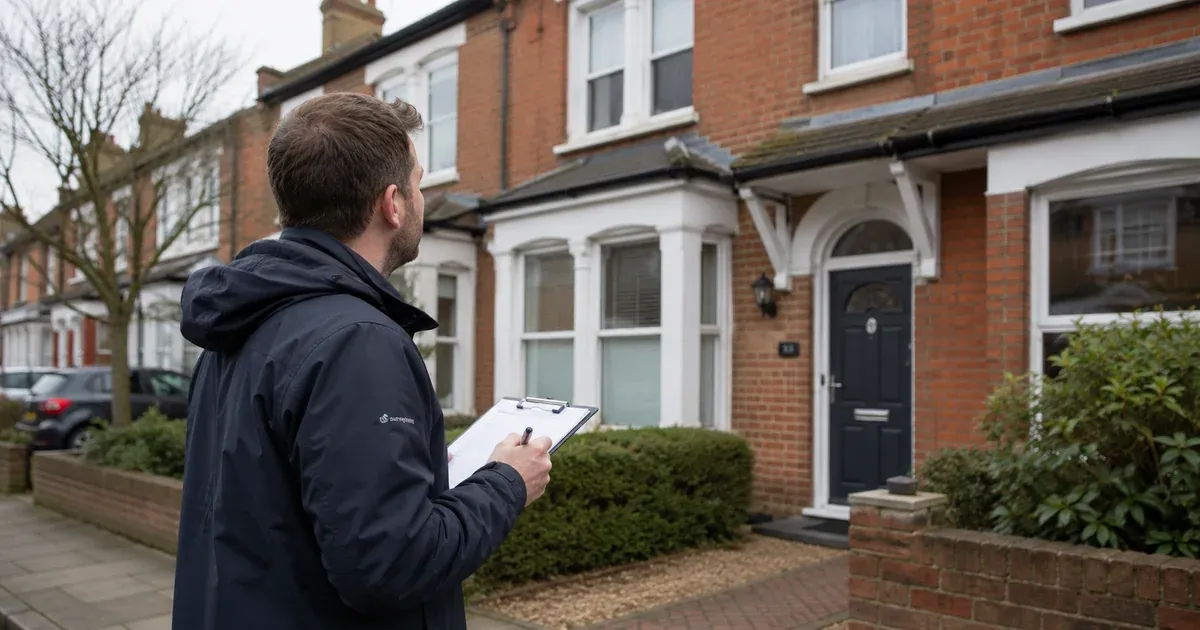
There are three parts, and the survey part has to be carried out by a chartered surveyor who's a member of RICS.
Part | Who completes it | What it covers |
|---|---|---|
Single Survey | A chartered surveyor (RICS member) | The property's condition, with each part rated 1 to 3, plus a valuation |
Property Questionnaire | The seller | Council tax band, parking, alterations and extensions, factor or shared repair costs |
Energy Report | A chartered surveyor (RICS member) | The energy rating and estimated running costs (Scotland's version of an EPC) |
Most Home Reports also come with a generic mortgage valuation report that lenders can use. Don't assume your lender will rely on it, though. Plenty still instruct their own valuation before they release any money.
Who pays, and when
The seller, and upfront. Under the Housing (Scotland) Act 2006, a Home Report has to be in place before a property is marketed, not after an offer comes in. It also can't be more than 12 weeks old on the day the property first goes on the market.
A few types of sale are exempt. The main ones are brand new homes that have never been lived in, recently converted properties, seasonal holiday accommodation, homes that are unsafe to live in or due to be demolished, and sales that never go on the open market, such as a sale to a sitting tenant under right to buy or a sale between family members.
Most sellers arrange the Home Report through their estate agent or solicitor, who books the surveyor and makes the finished report available to buyers alongside the sale particulars. Marketing a home without one breaks the 2006 Act, and local Trading Standards teams can take action, so no solicitor worth their fee will let you skip it to save time.
How this differs from buying in England or Wales
In England and Wales, you make an offer first. Only once it's accepted do you arrange and pay for your own survey. If that turns up problems, you're renegotiating the price (or asking the seller to fix things) weeks into the process.
In Scotland, the Single Survey is public before anyone offers. If the valuation looks low or the report flags damp in the back bedroom, you can build that into the offer you put in, rather than agreeing a price and trying to claw money back later.
Nothing is legally binding until missives are concluded. Missives are the formal letters exchanged between the buyer's and seller's solicitors, and either side can still walk away until that point.
What a Home Report costs
It depends on the size, value and location of the property, but most Home Reports cost between £400 and £800. A small flat can come in at around £350, while a large detached house can get close to £1,000. Expect to pay a bit more in Edinburgh and Glasgow than in rural areas.
Take a three-bedroom semi in Edinburgh valued at £280,000. The seller would typically pay somewhere towards the middle or upper end of that range, and would book the Home Report a few weeks before listing.
The buyer has a different bill to think about. Land and Buildings Transaction Tax (LBTT) is Scotland's version of stamp duty, and the Scottish Government has kept the rates and bands unchanged for 2026/27. On that same £280,000 home:
Buyer | How it's worked out | LBTT |
|---|---|---|
Moving home | 0% on the first £145,000, 2% on £105,000, 5% on £30,000 | £3,600 |
First-time buyer | 0% on the first £175,000, 2% on £75,000, 5% on £30,000 | £3,000 |
Second home or buy-to-let | £3,600 plus the 8% Additional Dwelling Supplement (£22,400) | £26,000 |
Everyone's tax position is different, so treat these figures as general information rather than advice. If you're moving in or around the capital, our guide to the cost of moving house in Edinburgh covers the rest of the bill.
How long a Home Report stays valid
There's no fixed expiry date in law. The 12-week rule only applies when the property first goes on the market, and you can take a home off the market for up to four weeks without needing a new report.
In practice, age still matters. Most lenders won't lend against a valuation that's more than about 12 weeks old, so if your house sits on the market for a few months, a buyer's lender will probably want it updated. That usually means a quick reinspection by the original surveyor to confirm nothing important has changed, which costs far less than a new report.
Can a buyer still get their own survey?
Yes. The Home Report gets the property to market, but it's commissioned by the seller and won't always tell you everything you want to know. If you're buying an older stone-built house, a flat above a shop, or anywhere the Single Survey flags something you'd like looked at properly, it's worth paying for your own survey before you commit to an offer. For older homes, a structural survey is the most thorough option.
The Home Report deals with the property itself. Your conveyancing solicitor handles everything else, from the title and the missives to moving the money on the day you complete. Our complete guide to conveyancing walks through that side of things, and when you're ready you can compare conveyancing solicitors in Edinburgh or Glasgow. And if you'd like a second opinion on the property before you offer, you can compare survey quotes through Moving Compared.
FAQs
Related Guides
RICS Level 1 surveys explained
5 mins read