
The slope effect: How the land beneath your home can affect its value
Understanding how the land beneath your home impacts its structural integrity and market value is essential for any buyer or seller. From drainage to subsidence, here is what you need to know about sloping plots.
5 mins read
28-08-2026

Key takeaways
- Sloping land can influence property value based on usability, drainage, and the cost of structural reinforcements.
- Soil composition, particularly clay, plays a significant role in ground movement and requires specific survey investigations.
- Professional surveys are vital for identifying early signs of subsidence or land slip.
- Proactive landscaping and drainage can mitigate the risks associated with uneven ground and protect resale value.
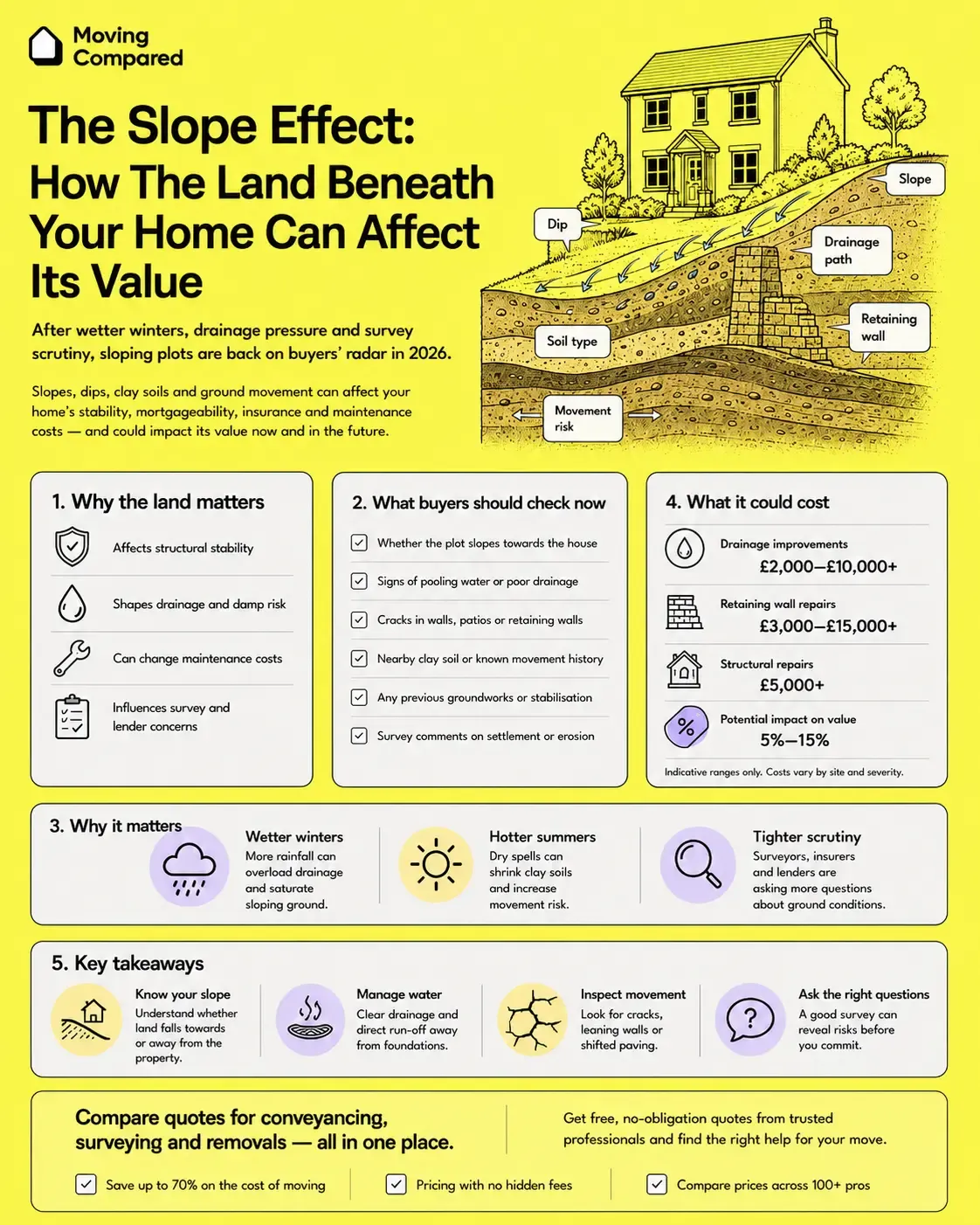
Prefer a copy to keep? You can grab the infographic here (it's free to download and there's no email required).
Does a sloping garden affect house value?
A sloping garden can reduce house value if the incline limits usable space or requires expensive landscaping. However, if the slope provides exceptional views or unique architectural opportunities, it may actually enhance the property's market appeal and desirability.
The impact of a slope on property value often comes down to practicality versus aesthetics. For many families, a steep incline is a drawback because it limits where children can play or where a patio can be placed. According to RICS, external features significantly contribute to a home's overall valuation. If a garden requires significant investment, such as thousands of pounds for terracing or retaining walls, buyers will often factor these costs into their offer.
Conversely, a home built on a hill might command a premium if it offers panoramic views that a flat plot cannot match. The key is how the land has been managed. A well-engineered, terraced garden with clear zones for sitting and planting can be a major selling point. If you are looking at a property with an uneven plot, using Moving Compared to find surveyors and get a quote can help you find a professional to assess whether the land is a liability or an asset.
How do different soil conditions impact property stability?
Soil conditions dictate how a building interacts with the ground. Clay soils are prone to shrinking and swelling with moisture changes, while sandy soils can wash away; both can lead to significant structural movement over time.
In the UK, clay soil is a common concern, particularly in the South East. The British Geological Survey provides extensive mapping on soil types, highlighting areas where shrink-swell capacity is high. When clay dries out during hot summers, it contracts, potentially causing the foundations to drop. When it rains, the soil expands and pushes against the structure. This constant cycle can lead to cracks in masonry and internal plasterwork.
Sandy or gravelly soils offer better drainage but can be susceptible to erosion or leaching. If water is not managed correctly, it can carve out voids beneath the foundations. A comprehensive house survey will include an assessment of the local geography and soil type. If a surveyor identifies high-risk soil, they may recommend a further desktop study or a structural engineer's report to ensure the building is fit for purpose.
What are the risks of ground movement and property subsidence?
Ground movement and subsidence occur when the land beneath a house sinks, pulling the foundations down with it. This can be caused by soil shrinkage, historical mining activity, or leaking underground pipes that wash away supporting earth.
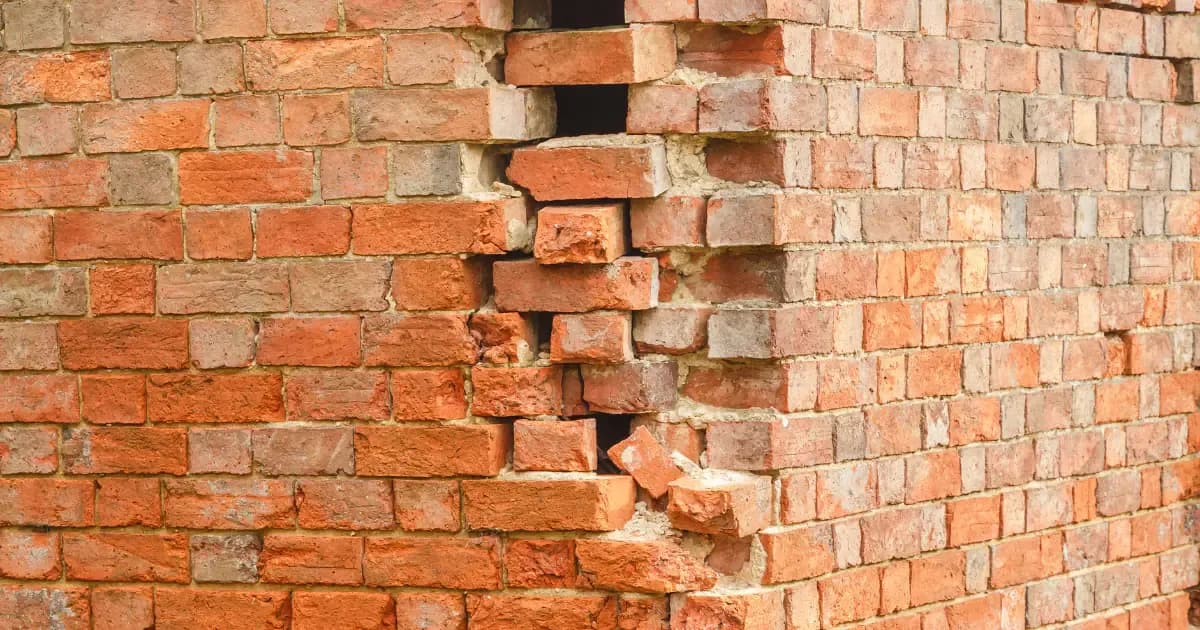
Subsidence is one of the most serious issues a homeowner can face. It often manifests as diagonal cracks wider than three millimetres, usually found around doors and windows — our guide on how to spot subsidence might be helpful. The Law Society notes that sellers must disclose known instances of subsidence during the conveyancing process. If you are buying, your solicitor will check HM Land Registry records and local authority searches to see if the property has a history of claims or structural repairs.
Historical mining is another factor in specific UK regions. In areas like Cornwall or the North East, old shafts can collapse, leading to sudden ground movement. The Coal Authority provides specific reports for these areas. Before committing to a purchase, use our conveyancing comparison tool to find a legal expert who specialises in these regional risks, ensuring your investment is protected from hidden geological threats.
Pro tip: Check for mature trees near the house. Large species like oaks or willows can drink hundreds of litres of water a day, drying out the soil and significantly increasing the risk of subsidence in clay areas.
Why is a house survey essential for sloping plots?
A house survey provides a professional evaluation of a building's structural integrity and the land it sits on. For sloping plots, a surveyor checks for signs of land slip, retaining wall failure, and drainage issues.
When you buy a home on uneven ground, a standard valuation is not enough. Consider a Level 2 or Level 3 RICS survey. These reports detail the condition of the property. A surveyor will look for bulging retaining walls, which suggest the land is putting too much pressure on the structures designed to hold it back. They will also look for leaning trees or fences, which are classic indicators of slow land movement or soil creep.
Identifying these issues early allows you to negotiate the price or request repairs before exchanging contracts. If the survey highlights significant concerns, you might need a specialist structural engineer. Moving Compared helps you compare surveyors who have the expertise to handle complex plots, giving you peace of mind that you are not buying a property that might literally slide away.
How does drainage work on uneven or sloping land?
Drainage on sloping land must be carefully managed to prevent water from pooling against the house foundations. Without proper channels, runoff can cause damp, soil erosion, and even pressure build-up behind retaining walls.
Gravity means that water will always find the lowest point. If your home is at the bottom of a slope, you are at risk of flooding or water ingress if the drainage system is inadequate. The Environment Agency offers guidance on surface water flood risks, which is particularly relevant for homes on hillsides. Effective drainage usually involves French drains, soakaways, or terraced systems that redirect water away from the main structure.
If you notice boggy patches in the garden or damp patches on the lower walls of a house, it suggests the land is not draining correctly. During the removal process, you might also find access difficult if the land is prone to becoming waterlogged. Ensuring the ground is stable and dry is not just about the house value; it is about the long-term liveability of the home.
Pro tip: Look at the weep holes in retaining walls. These small gaps allow water to escape from behind the wall. If they are blocked or non-existent, the wall could eventually collapse under the weight of waterlogged soil.
As a summary
Navigating the complexities of sloping land, soil types, and ground movement is a vital part of the home buying journey. While a hill can offer a beautiful view, it also brings responsibilities regarding drainage and structural maintenance. By commissioning a detailed survey and working with experienced conveyancers, you can identify potential risks before they become expensive problems. Whether you are dealing with clay soil or a steep garden, being informed is your best defence against depreciating property value.
Disclaimer: This article is for informational purposes only and does not constitute financial or legal advice. Readers should consult a qualified financial adviser or structural expert before making property-related decisions.
FAQs
Related Guides


The complete guide to property surveys
15 mins read